

How can researchers introduce more active sites into porous carbon while preserving the pore structure needed for sulfur loading and ion transport?
A recent study explored this challenge by developing tungsten and nitrogen co-doped nanoporous carbon (W,N-C) as a multifunctional sulfur host for lithium-sulfur (Li-S) batteries. Using a CIQTEK specific surface area and pore size analyzer, the researchers quantified changes in pore structure during W,N doping and evaluated the material again after sulfur loading.
The results showed that increasing tungsten content gradually reduced specific surface area and pore volume. Among the tested compositions, W,N-C-5 provided a better balance between introducing active sites and preserving the porous structure. After sulfur loading, its BET specific surface area decreased to 5.32 m2/g, while pore volume decreased to 0.009 cm3/g, supporting the conclusion that sulfur had entered and occupied the pore network.
The research was conducted by the team led by Xingxing Gu at Chongqing Technology and Business University, in collaboration with the team led by Ya-Xiong Wang at Fuzhou University. The paper, "Multi-functional W,N-co-doped nanoporous carbon contributes to high-performance Li-S batteries," was published in Nano Materials Science.
Research paper: https://doi.org/10.1016/j.nanoms.2025.06.003
Why Pore Structure Matters in Lithium-Sulfur Batteries
Lithium-sulfur batteries have a theoretical energy density of up to 2,567 Wh/kg, making them attractive for next-generation energy storage. However, several challenges still limit their practical performance.
Sulfur and its discharge products, Li2S2 and Li2S, have poor electrical conductivity. Soluble lithium polysulfides can migrate through the electrolyte and separator, causing the shuttle effect. Uneven lithium deposition can also lead to dendrite growth and reduced battery safety.
Porous carbon is commonly used as a sulfur host because it provides a conductive framework and space for sulfur loading. However, conventional carbon is nonpolar and interacts relatively weakly with lithium polysulfides.
Introducing heteroatoms such as nitrogen and transition metals can improve chemical adsorption and catalytic conversion. The challenge is finding the right balance: more active sites do not necessarily mean better performance if the pore structure is significantly reduced. This is where BET surface area and pore size analysis become important.
Material Design: W,N-Co-Doped Nanoporous Carbon
The researchers used ramie textile industrial degumming waste liquid as the carbon and nitrogen source, and sodium tungstate as the tungsten source. The materials were freeze-dried and then carbonized at 800°C to prepare W,N-co-doped nanoporous carbon.
By adjusting the sodium tungstate concentration to 1, 5, and 10 mmol/L, the researchers prepared three compositions: W,N-C-1, W,N-C-5, and W,N-C-10. A nitrogen-doped carbon sample without tungsten, N-C, was used as the reference.
This comparative design allowed the team to investigate how tungsten and nitrogen incorporation affected the porous structure and subsequent battery performance.
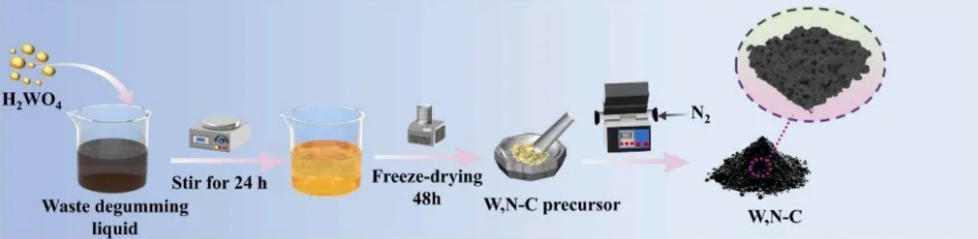
Figure 1. Schematic Illustration of the W,N-C Preparation Process
BET and Pore Size Analysis Reveal the Effect of W,N Doping
The researchers used a CIQTEK BET specific surface area and pore size analyzer to perform nitrogen adsorption measurements. BET analysis was used to determine specific surface area, while BJH and DFT methods were applied to analyze pore size distribution.
The N-C and W,N-C samples showed Type IV nitrogen adsorption-desorption isotherms with clear hysteresis loops, indicating mesoporous structures. Pore size distribution results, together with TEM observations, further supported the presence of hierarchical porosity.
The N-C sample exhibited the highest specific surface area and pore volume. As the tungsten precursor concentration increased, both values gradually decreased.
This comparison revealed an important trade-off. Introducing W,N active sites changed the available pore structure, so simply increasing the doping level or maximizing surface area was not enough to identify the best material.
When the pore characterization results were considered alongside the electrochemical results, W,N-C-5 showed a better balance between active-site introduction and preservation of the porous network.
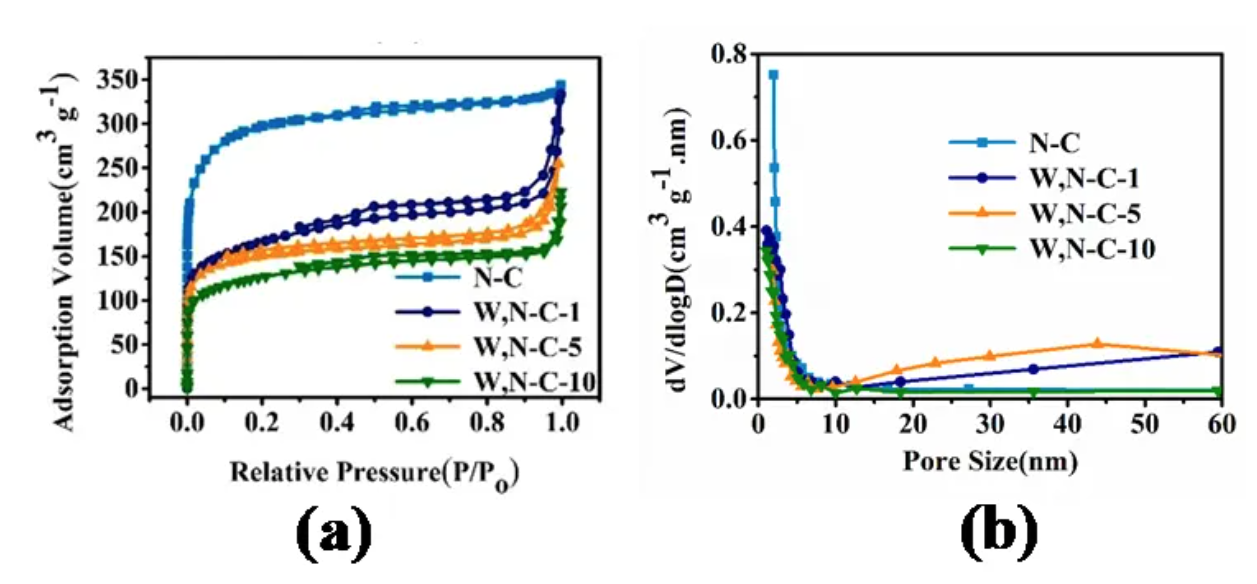
Figure 2. Nitrogen Adsorption-Desorption Isotherms and Pore Size Distributions of N-C and W,N-C Samples
Pore Structure Changes after Sulfur Loading
After preparing the porous carbon materials, the researchers introduced sulfur to form W,N-C/S composite cathodes. Thermogravimetric analysis (TGA) showed sulfur contents of approximately 66% to 69%, close to the designed value of 70%.
To investigate whether sulfur had entered the pore network, nitrogen adsorption measurements were performed again after sulfur loading.
For W,N-C-5/S, the BET specific surface area decreased to 5.32 m2/g, and the pore volume decreased to 0.009 cm3/g.
The substantial reductions in gas-accessible surface area and pore volume, together with XRD, SEM, and TEM characterization, supported the conclusion that sulfur had entered and occupied the pore channels. This comparison demonstrates how BET and pore size analysis can help evaluate structural changes before and after material loading.
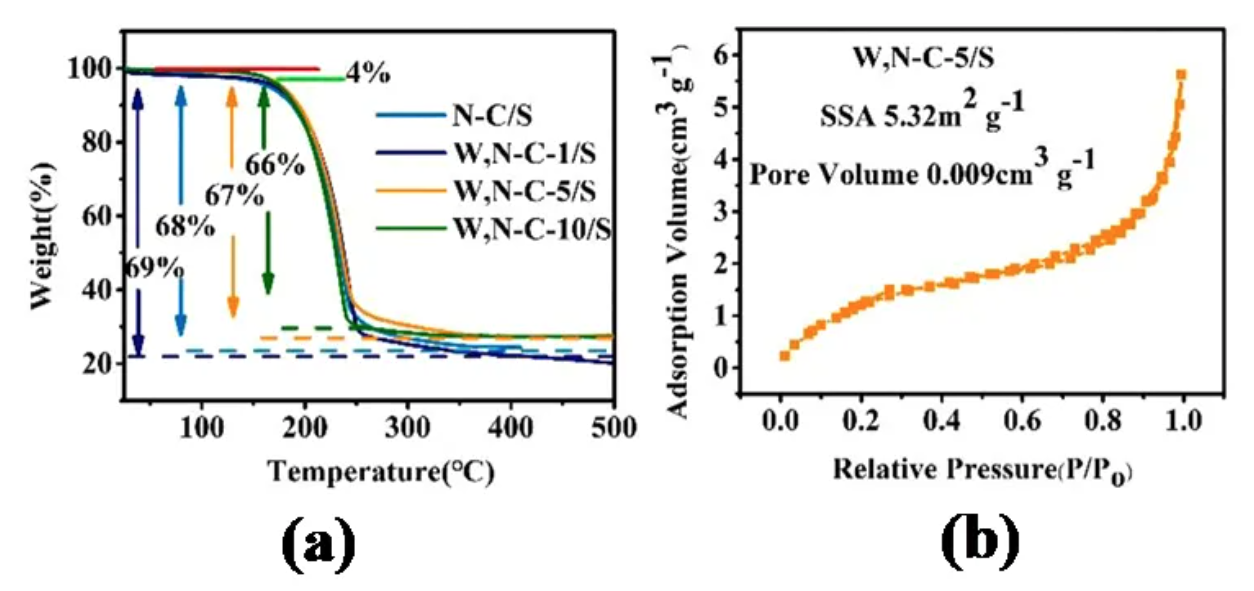
Figure 3. TGA Results and Nitrogen Adsorption Isotherm of W,N-C-5/S after Sulfur Loading
W,N-C-5/S Delivers Improved Battery Performance
Electrochemical testing showed that W,N-C-5/S exhibited the highest cyclic voltammetry (CV) peak current and the smallest potential difference between oxidation and reduction peaks among the compared cathodes. These results indicated lower polarization and faster reaction kinetics.
At a rate of 0.2 C, W,N-C-5/S delivered an initial discharge capacity of 1,312.6 mAh/g. At 1 C, it retained a reversible capacity of 771.7 mAh/g after 500 cycles, with an average capacity decay of approximately 0.037% per cycle.
The material also maintained a capacity of 853 mAh/g at 2 C. Under a high sulfur loading of 4.0 mg/cm2, the cathode delivered 717.8 mAh/g after 50 cycles at 0.2 C, with approximately 82% capacity retention.
Further kinetic measurements and theoretical calculations supported faster Li+ diffusion and lower charge-transfer resistance. Li2S nucleation tests and DFT calculations also indicated that W,N-C promoted lithium polysulfide adsorption and conversion.
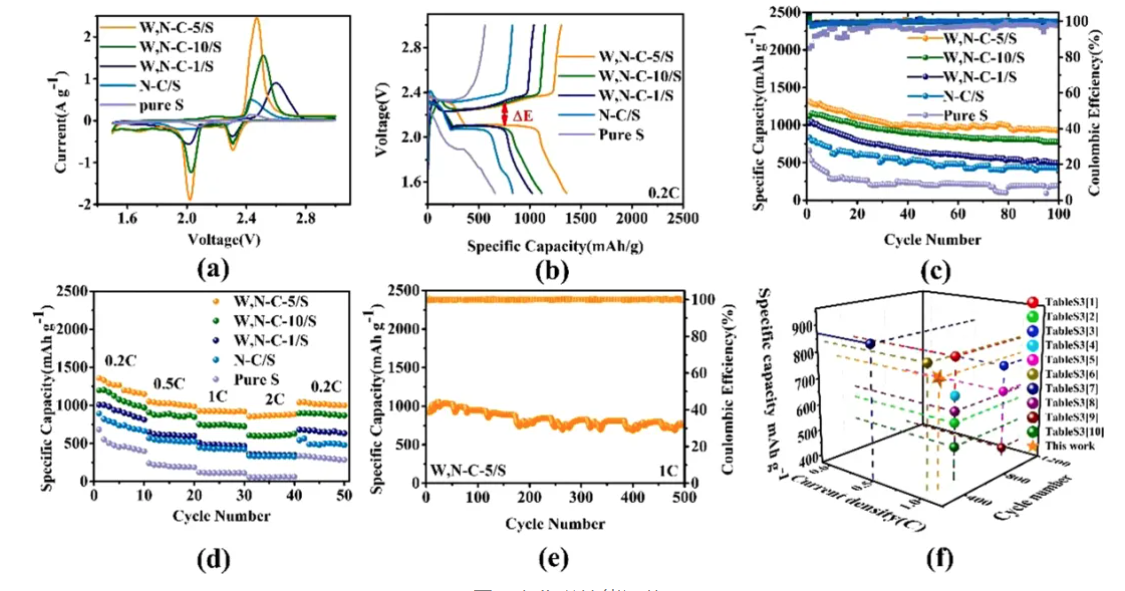
Figure 4. Electrochemical Performance of W,N-C/S Composite Cathodes
How Pore Confinement, Chemical Adsorption, and Catalysis Work Together
The improved performance of W,N-C can be understood through three complementary effects: pore confinement, chemical adsorption, and catalytic conversion.
The hierarchical porous carbon framework provides a conductive network and space for sulfur loading. Micropores help physically confine lithium polysulfides and provide ion transport channels. Mesopores help balance sulfur loading and electrolyte wetting, while larger pores facilitate electrolyte penetration and reduce Li+ diffusion resistance.
W,N doping introduces polar adsorption sites that strengthen interactions with lithium polysulfides, helping suppress their dissolution and migration. W-N-related active sites also promote polysulfide redox reactions and Li2S formation.
Together, these effects help reduce polysulfide accumulation in the electrolyte and improve the stability of the lithium anode. The study highlights the importance of optimizing pore structure and chemical functionality together rather than focusing on either one alone.
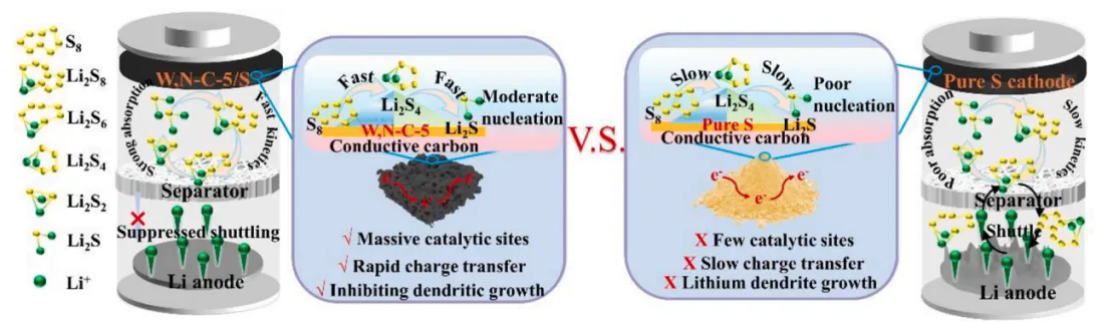
Figure 5. Proposed Synergistic Mechanism of W,N-C-5 for Improving Li-S Battery Performance
BET Analysis: Connecting Material Structure with Battery Performance
This study demonstrates how BET surface area and pore size analysis can support the development of porous materials for battery applications.
By comparing different W,N doping levels, the researchers quantified changes in specific surface area and pore volume, helping identify a suitable balance between active-site introduction and pore structure preservation. Repeating the measurements after sulfur loading provided further evidence of changes in the accessible pore network.
For researchers working with porous carbon, catalysts, and battery materials, the CIQTEK SiCOPE Series Specific Surface Area and Pore Size Analyzer provides characterization capabilities for microporous and mesoporous materials.
The SiCOPE series focuses on precise characterization of micropores in the 0.35–2 nm range. It supports measurements using N2, CO2, Ar, H2, and other non-corrosive gases. Its software integrates BET, Langmuir, HK, and more than 40 NLDFT models.
A low-pressure section designed for micropore measurements supports adsorption data collection, while intelligent BET point selection helps reduce differences caused by manual point selection. Combined with multi-station testing, the system supports formulation screening, batch comparisons, and pore structure evaluation before and after material loading.
CIQTEK SiCOPE Series: Technical Specifications
Selected specifications relevant to surface area and pore structure characterization are listed below.
| Parameter | Specification |
|---|---|
| Analysis Stations | 4 / 6 stations, with simultaneous multi-sample analysis |
| Adsorptive Gases | N2, Ar, CO2, H2, and other non-corrosive gases |
| Specific Surface Area | 0.01 m2/g (N2) and 0.0005 m2/g (Kr) and above |
| Pore Characterization | Pore size: 0.35–500 nm Total pore volume: 0.0001 cm3/g and above |
| Measurement Repeatability | BET RSD: less than 0.5% (with standard BET samples) Most probable pore size deviation: ≤0.02 nm |
| Relative Pressure Range | P/P0: 10-8–0.998 |
| Analysis Models | BET, Langmuir, BJH, HK/SF, T-Plot, DA/DR, NLDFT, HS-2D-NLDFT, QSDFT, GCMC, and more |
From initial material screening to pore structure evaluation after sulfur loading, CIQTEK SiCOPE supports researchers in characterizing porous materials and understanding how structural changes relate to material performance.
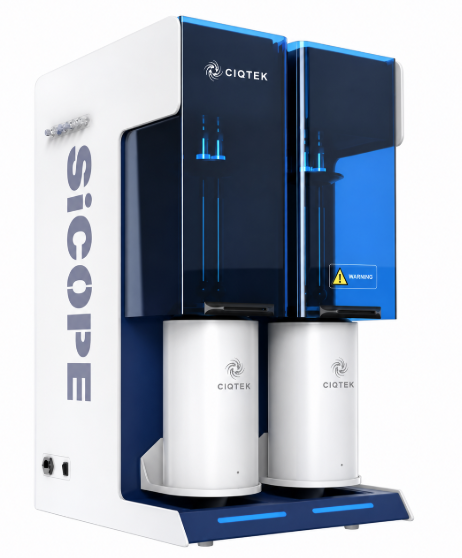
Figure 6. CIQTEK SiCOPE Series Specific Surface Area and Pore Size Analyzer